
Build or buy a lightbox? Which parts you need, what matters with LEDs and the power supply unit, and when made to measure pays off.
In short
An LED lightbox consists of a profile frame, side-lit LED modules, a power supply and a fabric print with keder; when building one yourself, even light, clean corners and the electrics are the biggest hurdles. Ready-made to measure, you choose the width and height to the centimetre from 30 to 300 cm and profiles 80, 120 or 160 mm deep – the price including artwork print appears instantly in the configurator.
An LED lightbox looks simple: a frame, a few LEDs, a print in front. Anyone who wants to build one soon realises that even light, clean corners and crease-free artwork take more planning than expected. This guide shows which parts a lightbox consists of, what matters with the lighting and when self-build, a kit or a ready-made Made-to-Measure LED Lightbox is the better choice.
What parts does an LED lightbox consist of?
The profile
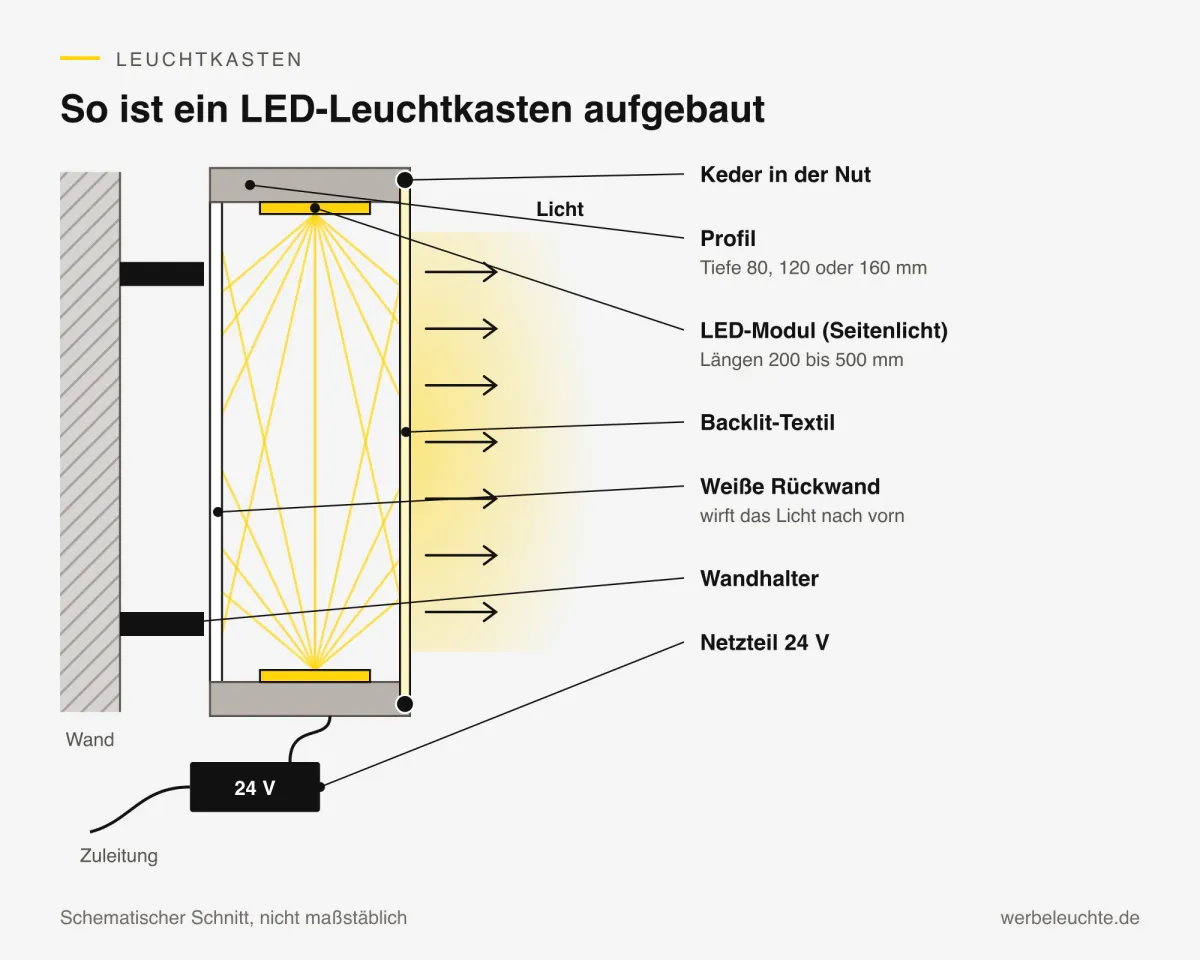
The frame determines depth, stability and look. For fabric prints, profiles with a groove running all round are used, into which the fabric is inserted with its keder. The deeper the profile, the greater the distance between the LEDs and the print – this generally improves evenness. In our range, lightbox profiles range from 80 through 120 to 160 mm depth; the 160 mm profile is suitable for double-sided lightboxes.
The corners and connectors
Mitre cuts and corner connectors keep the frame square. Inaccurate cuts lead to gaps through which light escapes, and to creases in the fabric.
The lighting
There are two principles:
- Edge lighting (edge-lit): LED modules sit on the inside of the frame and shine in from the side. This allows slim lightboxes.
- Back-panel lighting (backlit): LED boards are mounted across a back panel and shine forwards.
Our made-to-measure lightboxes use edge-lit modules, from Osram or Toshiba as preferred, in lengths from 200 to 500 mm.
Power supply and wiring
The LED modules run on low voltage (24 V) and need a suitably rated power supply. Rule of thumb: choose a power supply with some reserve so that it does not run permanently at its limit. Add to this connectors, terminals and a power cable.
Back panel and reflection
A white back panel or reflective film reflects the light forwards and increases brightness.
The print
A backlit fabric with a keder all round. The print artwork must observe size, bleed and safe zone exactly, otherwise it will sit crooked or edges will be cut off.
Mounting
Wall brackets, feet for free-standing boxes or wire rope suspensions for the ceiling.
Building it yourself: what you should know
Advantages
- Maximum freedom in material and shape
- Learning experience and enjoyment of the project
- Achievable with simple means for very small sizes
Challenges
- Even light: too few or incorrectly placed LEDs create bright stripes and dark zones. The arrangement depends on profile depth, size and fabric.
- Electrics: power supply, wiring and strain relief must be installed safely. Work on mains power belongs in the hands of a qualified professional.
- Precision: mitre cuts, squareness and fabric tension determine the look.
- Materials in small quantities: profiles are often only available in stock lengths, LEDs and power supplies in fixed power ratings – for a single size there is wastage.
- Print production: a fabric print with keder to fit a self-built frame must be measured precisely.
The middle ground: kits and individual parts
For shopfitters, workshops and experienced DIY enthusiasts, there is a middle ground: profiles, corner connectors, LED modules, power supplies and mounting accessories as individual parts matched to one another. We supply lightbox and tension frame profiles as stock lengths (6,100 mm) and cut to length or mitred, plus corner connectors, LED modules, power supplies, feet, wall brackets and suspensions – see Accessories. This way profile, light and keder all match, and you only need to assemble them.
Buying: made-to-measure lightbox
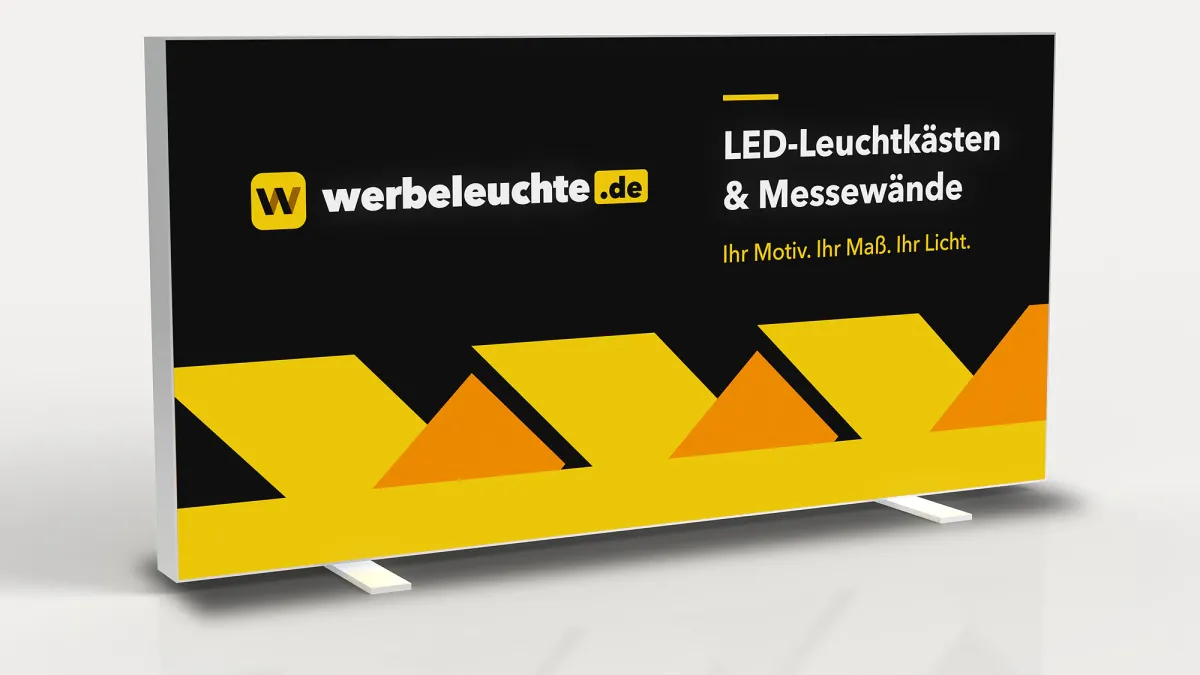
The most convenient way is a ready-configured lightbox in the size you need. In our Made-to-Measure LED Lightbox you enter the width and height between 30 and 300 cm, choose the profile, LED quality and mounting – and see the price including artwork print instantly, with a transparent parts list. Profiles, corners, LED modules and power supply are put together to match the size.
Advantages
- Even illumination, because LED layout and power supply are matched to the size
- Exact dimensions without wastage
- Matching print with keder included – delivered ready printed, with design service on request from €300 net, each further system with the same design just €90 net
- Artwork template for your size to download
Comparison at a glance
| Criterion | Self-build | Individual parts/kit | Made-to-Measure Lightbox |
|---|---|---|---|
| Effort | high | medium | low |
| Even light | requires experience | easy to plan | matched to the size |
| Electrics | your own responsibility | matched components | matched components |
| Matching print | measure yourself | Profile with keder groove | from a single source |
| Price | depends on material and wastage | Material cost | instantly in the configurator |
Lightbox or tension fabric frame?
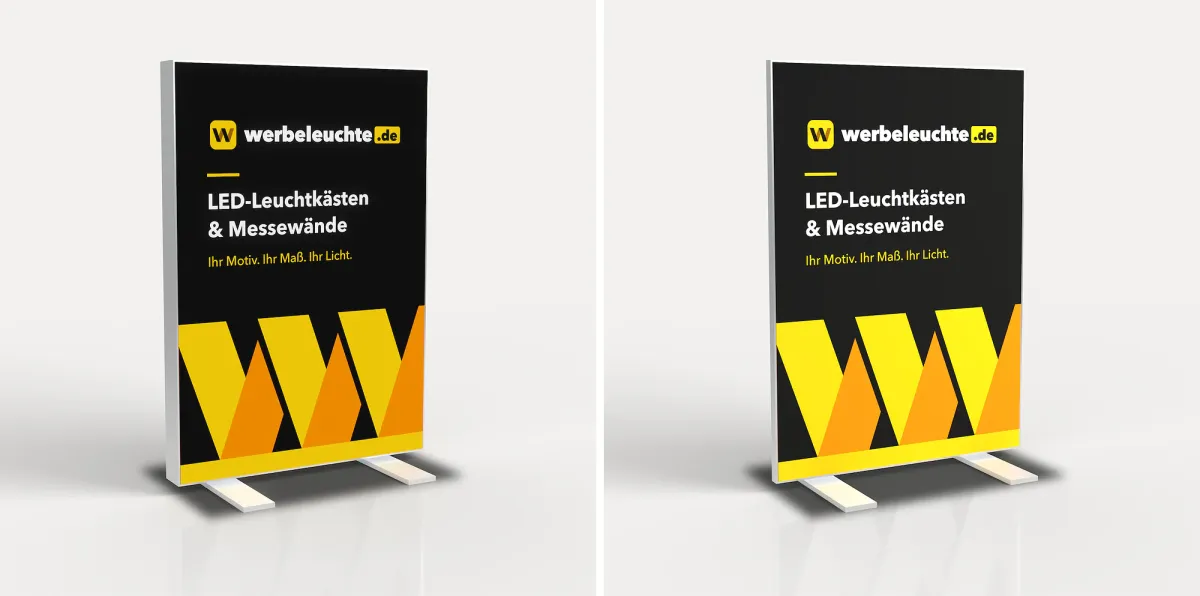
Not every surface needs light. A fabric tension frame carries the fabric print without illumination and, with profiles from 15 to 65 mm, is particularly slim and affordable – ideal for well-lit rooms. You will find both versions in the Lightboxes & Tension Fabric Frames collection.
Planning tips for every lightbox
Whether you build or buy: measure the area precisely and consider where the power supply will come from. For wall mounting, plan the distance from the wall and the position of the wall brackets; for ceiling mounting, the load capacity of the suspension. For shop windows, it is worth considering passers-by’s line of sight – a lightbox at eye level is often more effective than one right at the top. And: only create the artwork once the final size is fixed, because every size has its own artwork template.
Example prices for ready-made lightboxes and everything about illuminated in-store advertising can be found on the page Shop Signage Made to Measure.