
Using a light wall in your shop: shop window, entrance, back wall, room divider and till – with formats, power consumption, graphic changes and costs.
In short
In a shop, a light wall has the strongest impact in the window, at the entrance, as a back wall, as a room divider or at the till – it shines by itself and gets a new look with new artwork, without tools. Portable LED light walls start at €426.91 incl. VAT and artwork print; they need 21 W (Mini, 50 × 150 cm) to 77 W (Classic, 245 cm high), and at 59 W and ten hours a day that is around 17.7 kWh a month.
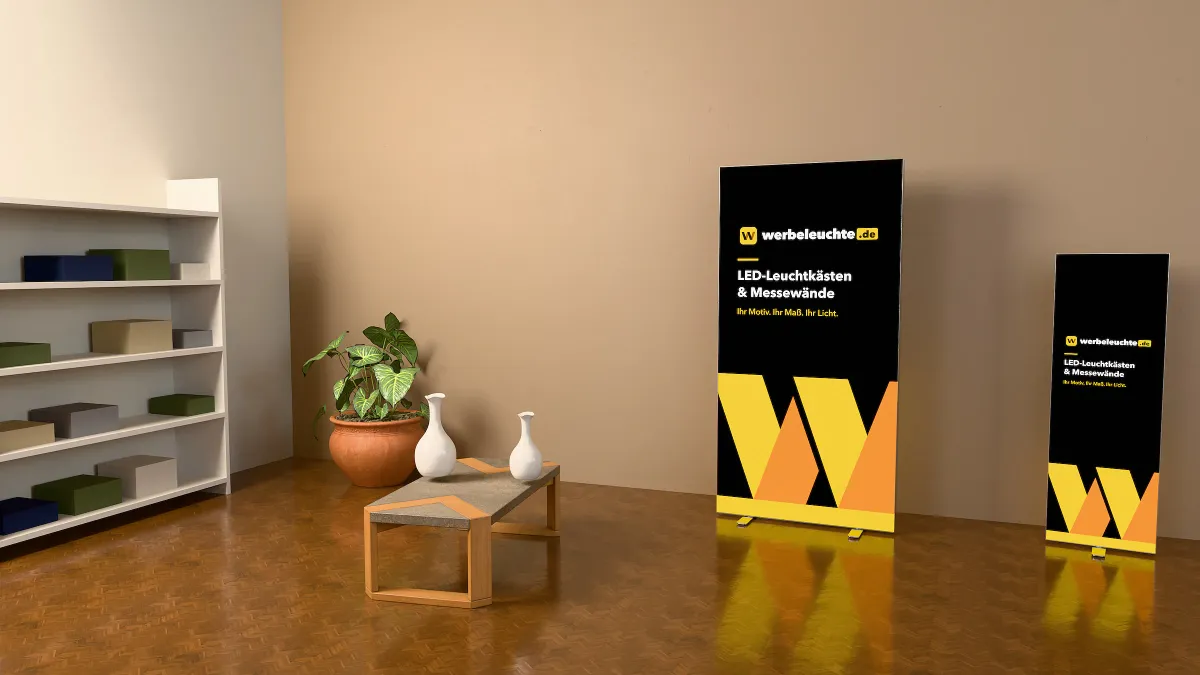
Customers decide within a few seconds whether to stop, go in and where to look in the shop. Visual merchandising guides these glances – with product presentation, customer flow and light. A light wall is one of the most powerful tools for this: it glows by itself, stands out from the rest of the shop lighting and can be redesigned with a new graphic in no time. This guide shows where a light wall has the greatest effect in a shop, which formats are available and what operation and graphic changes cost.
Why light is so effective in visual merchandising
The eye is drawn to bright surfaces. In a shop with even general lighting, a backlit surface is therefore noticed immediately – similar to a screen, but calmer and without motion. Three effects make it interesting for retail:
- Eye-catcher: A glowing surface at the end of the room draws customers deeper into the shop.
- Staging: In front of a bright image wall, products look as if they are on a stage.
- Orientation: Illuminated graphics mark departments, promotional areas or the till.
The best places for a light wall in a shop
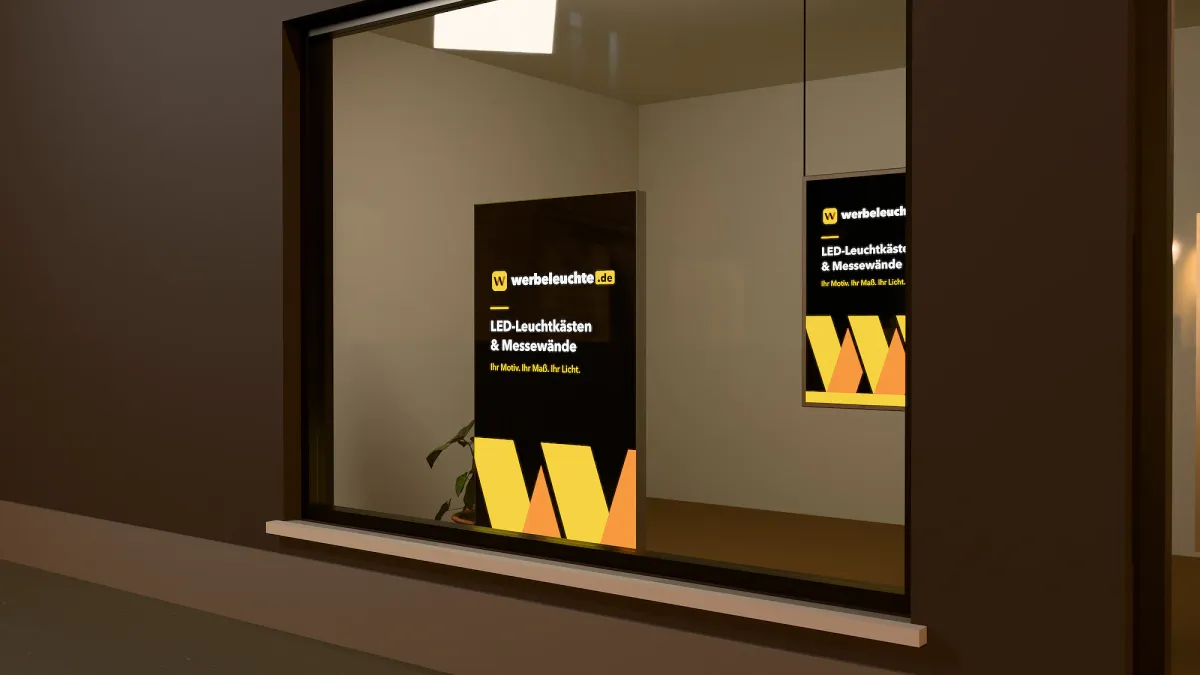
1. In the shop window
The shop window is your calling card to the street. A light wall behind the glass makes it visible even at dusk and after closing time. A Portable LED Light Wall Classic stands freely in the window without installation and can easily be moved for the next display. For windows with unusual dimensions, a Made-to-Measure LED Lightbox fits to the centimetre between 30 and 300 cm.
2. In the entrance area
Just inside the door, customers need a moment to arrive. A slim light wall next to the entrance – with the current campaign or a welcome graphic – sets the first accent here without blocking the way. The LED Light Wall Mini 50 × 150 cm needs only 50 cm of width.
3. On the back wall
The back wall is often the least noticed part of a shop. A large illuminated surface there draws customers through the entire room. A made-to-measure lightbox on the wall or several light walls side by side form a continuous brand wall.
4. As a room divider
A freestanding LED Frame System Line separates areas – such as womenswear and menswear, advice and sales, or showroom and stockroom – and can carry a graphic on the front and back. The system is available from 200 × 200 to 500 × 300 cm.
5. At the till and counter
Customers wait briefly at the till – the ideal time for add-on offers or loyalty programmes. A small light wall behind the till or a Digital Cash Tray 11.6 inch right on the counter makes use of this moment.
6. Suspended from the ceiling
A double-sided lightbox suspended from the ceiling is visible from both sides of the aisle and marks departments above the shelves. In the configurator, choose the 160 mm profile with printing on both sides.
Examples from retail
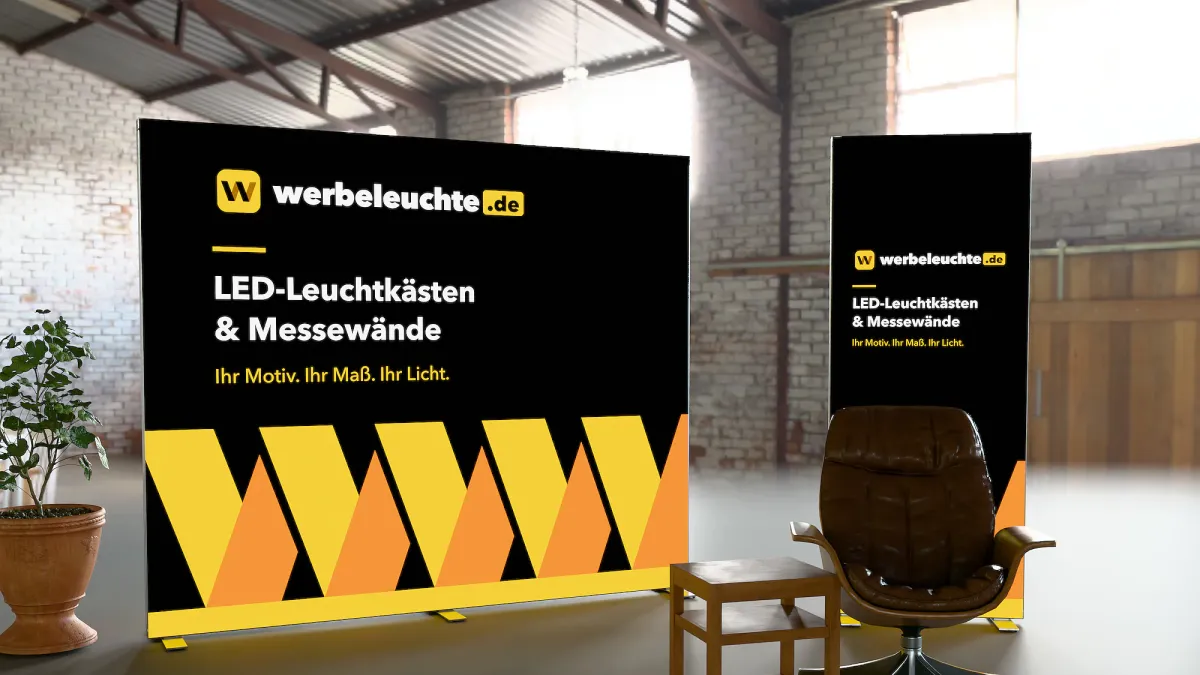
- Fashion store: Large campaign images on a light wall at the back wall, with a change of graphic every season.
- Opticians and cosmetics: Slim light walls next to the shelves show brand images at customers' eye level.
- Bakery and café: A lightbox above the counter with a product photo, plus changing offers on a small screen at the till.
- Car dealership and showroom: A room divider made from the frame system creates a calm consultation zone while also carrying the brand.
- Pharmacy: Seasonal themes such as sun protection or colds as an illuminated graphic in the shop window.
Which light wall for which shop?
| Product | Format | Performance | Placement |
|---|---|---|---|
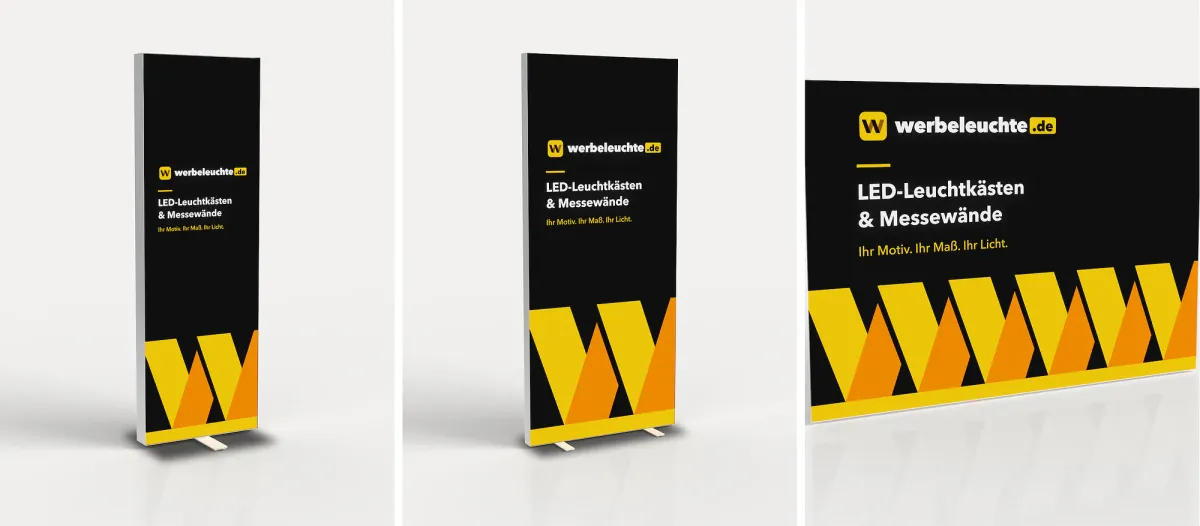
| LED Light Wall Mini 50 × 150 cm | 50 × 150 cm | 21 W | freestanding |
| Portable LED Light Wall Classic | 85/100 × 200, 230, 245 cm | 59 to 77 W | freestanding |
| Made-to-Measure LED Lightbox | freely selectable from 30 to 300 cm | depending on size | Wall, ceiling, stabiliser feet |
| LED Frame System Line | 200 × 200 to 500 × 300 cm | 78 to 134 W | freestanding, room divider |
| LED Frame System Line with Monitor 73 × 200 cm | 73 × 200 cm with 49-inch monitor | 139 W | freestanding |
All systems are delivered ready printed – printing your artwork is already included in the price shown. You will find current prices on the product pages and, for lightboxes, directly in the configurator.
Not every surface needs light: in bright rooms, an unlit tension fabric frame with profiles from 15 to 65 mm is sometimes enough. You will find both versions in the Lightboxes & Tension Fabric Frames collection; our guide Build or buy a lightbox? Materials and costs explains the difference between DIY and a ready-made solution.
Light and colour: what to bear in mind
Colour temperature
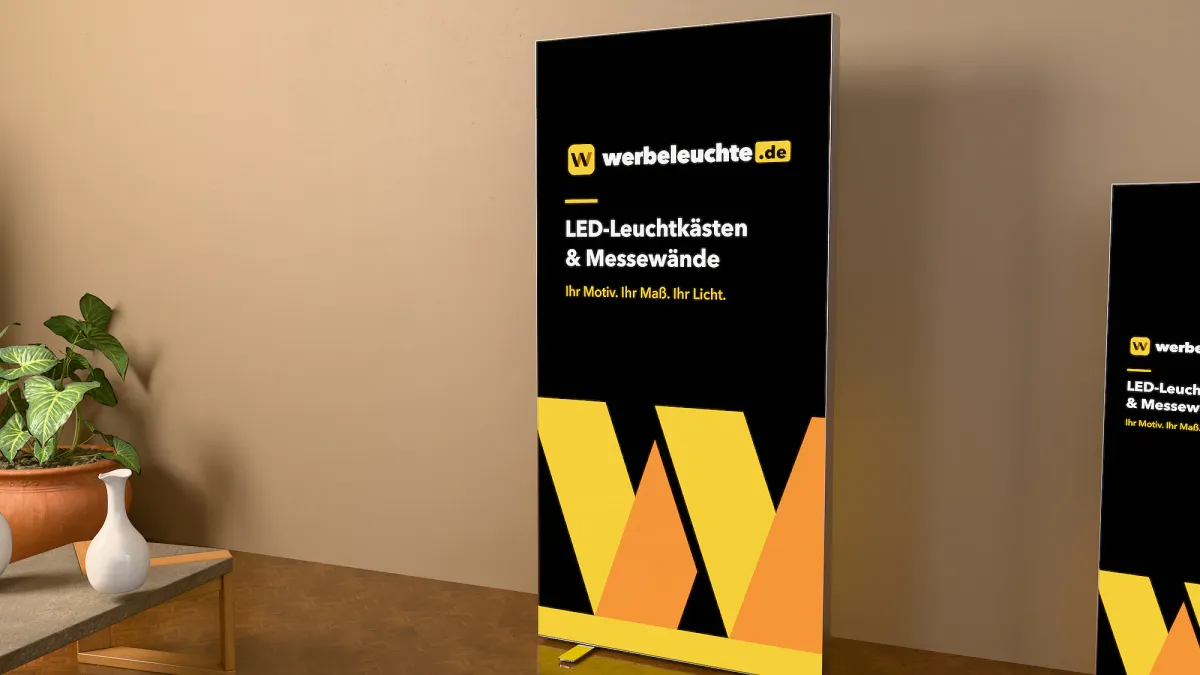
According to the data sheet, our portable light walls Classic and Mini work at 6,500 K – a cool, daylight-white light. It makes colours look clear and fresh. In shops with very warm general lighting, this creates a visible contrast. That may be intentional, to make the surface stand out; if you prefer a more harmonious look, balance it with warmer tones in the graphic.
Designing graphics for light
- Little text, large images: A light wall works as an image, not as a poster full of text.
- Light areas: A lot of light passes through light areas – they glow. Very dark graphics lose the luminous effect.
- Product relevance: Show the goods displayed in front of it – or the world in which they are used.
- Safe zone: Do not place logos and text too close to the edge. The details are in our guide Artwork for fabric printing: bleed, resolution, colour.
Changing graphics: new every season
The biggest advantage over permanently bonded advertising: the fabric print is simply inserted into the profile groove and can be changed at any time. That way you adapt the surface to the season, campaign or sale without buying a new system.
Your first artwork is already included when you buy – the light wall arrives ready printed. Each further print costs €40 net per square metre and side:
| Format | Print area | Print net | Print incl. VAT |
|---|---|---|---|
| 85 × 200 cm | 1.70 m² | €68.00 | €80.92 |
| 100 × 200 cm | 2.00 m² | €80.00 | €95.20 |
| 100 × 245 cm | 2.45 m² | €98.00 | €116.62 |
If you plan four seasonal designs a year for a 100 × 200 cm light wall, you can therefore expect €320.00 net in print costs per year. Without your own artwork, our design service prepares the artwork files for €300 net; each further system in the same order with the same design costs just €90 net.
Power and operation
The power consumption is listed for every product. A Light Wall Classic measuring 100 × 200 cm needs 59 W. With ten opening hours on 30 days, that is around 17.7 kWh a month. Multiply the value by your electricity price – at an assumed €0.30 per kWh, that is about €5.31 a month. A timer ensures that the wall in the shop window only lights up while passers-by are around.
The light walls run from a standard socket. Plan the position so that the cable does not run across the customers' walkway.
Combining light and moving images
Light walls and screens complement each other: the light wall carries the brand, the screen shows product videos or daily offers. The Line with Monitor collection combines both in one totem. For a shop window with changing content, the Digital Window Display 55 inch with 2,000 nits is ideal. Our guide Digital signage for beginners: hardware, software, costs gives an overview of screens and software.
Checklist: planning a light wall in your shop
- Where should attention be drawn – shop window, entrance, back wall, till?
- How much space is available? According to the data sheet, the Light Wall Classic needs a depth of 38 cm.
- Is there a socket nearby?
- How bright is the room, and how warm is the rest of the lighting?
- How often do campaigns and seasonal graphics change?
- Does the format suit shelves, windows and sight lines?
- Who designs and orders new graphics?